
Subtotal $0.00
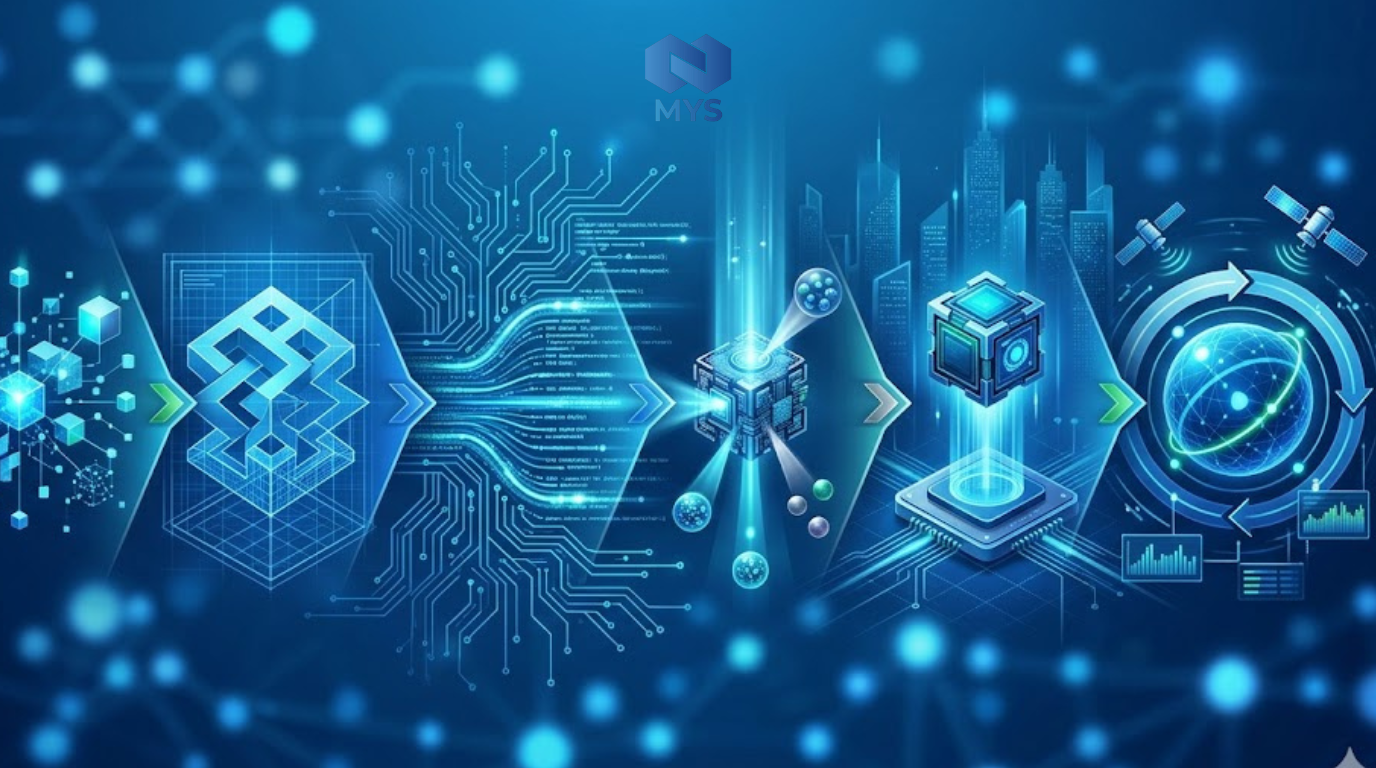
Every successful piece of software, whether it’s a banking app used by millions or an internal tool built for a single team, follows some version of the same journey. That journey has a name: the Software Development Life Cycle (SDLC), and it’s broken down into six core stages that take an idea from a blank whiteboard to a running product in the hands of real users.
Skipping stages or rushing through them is one of the most common reasons software projects fail. At MYS-VN Software, we’ve seen firsthand how a well structured development process can be the difference between a product that ships on time and one that burns through budget for months. This guide walks you through all six stages of the software development process, explains the most common methodologies, and shows you how to avoid the mistakes that derail most projects.
What Is the Software Development Process?
The software development process is the structured approach teams use to plan, build, test, deploy, and maintain software. Think of it as the blueprint that turns a rough idea into a working product. It defines who does what, in what order, and how the team knows when each step is truly finished.
Different teams call it different things, such as SDLC, software engineering process, or development lifecycle, but the core concept is the same. A disciplined process reduces risk, keeps stakeholders aligned, and produces software that actually matches business requirements instead of drifting off course halfway through the build.
Every project, regardless of size or complexity, moves through six recognizable phases. Let’s break them down.
The 6 Stages of the Software Development Process
Stage 1: Requirements Gathering and Analysis
Everything starts here, and honestly, this is where most projects quietly go wrong. Before a single line of code gets written, the team needs a crystal clear picture of what the software is supposed to do, who will use it, and what problems it needs to solve.
During this stage, project managers, business analysts, and key stakeholders sit down to answer questions like:
- Who are the end users of this software?
- What business problem are we solving?
- What features are must haves versus nice to haves?
- What data will the system handle, and what outputs are expected?
- What are the technical, legal, and compliance constraints?
The output of this phase is a Software Requirements Specification (SRS), a formal document that captures every agreed upon requirement. This document becomes the north star for every stage that follows. Skimp on it, and you’ll pay for it later in rework, missed deadlines, and frustrated stakeholders.
Modern teams often use collaborative tools, user interviews, and even AI assisted note taking to capture requirements more accurately during discovery workshops. The goal is simple: leave this stage with zero ambiguity about what needs to be built.
Stage 2: Design and Architecture
Once the requirements are locked in, the design team translates them into a technical blueprint. This stage answers the “how”. How the system will be structured, which technologies will power it, and how all the moving parts will fit together.
Two levels of design usually happen here:
- High level design (HLD): Defines the overall architecture, major modules, database structure, and how components will interact. This is the 30,000 foot view.
- Low level design (LLD): Gets into the specifics such as individual modules, class diagrams, data flows, API contracts, and detailed logic.
The design phase also produces UI and UX mockups and prototypes, so stakeholders can visualize the product before development starts. This is the cheapest time to catch design flaws. Changing a button layout in a Figma mockup takes five minutes. Changing it after three weeks of coding can cost days of work.
Testers also start planning their test strategies during this phase, mapping out what needs to be verified and how.
Stage 3: Coding and Implementation
This is the stage most people picture when they think of “software development”, where developers actually write code. It’s also typically the longest phase of the entire process.
The work gets divided into modules and assigned to individual engineers or small teams. Developers follow the design documents, adhere to coding standards, and use version control systems like Git to collaborate without stepping on each other’s work. Code reviews, pair programming, and continuous integration pipelines help catch bugs early and keep quality high.
Depending on the project size, this stage can last anywhere from a few weeks for a simple MVP to several months for a complex enterprise system. The key to keeping things on track here is discipline: regular stand ups, clear sprint goals, and honest progress reporting.
Stage 4: Testing and Quality Assurance
Once code is written, it has to be rigorously tested before anyone outside the team sees it. Testing isn’t a single activity. It’s a layered process that catches different kinds of bugs at different levels:
- Unit testing verifies that individual functions and components work as expected.
- Integration testing checks that different modules play nicely together.
- System testing evaluates the entire application end to end.
- User acceptance testing (UAT) lets real users or stakeholders try the product and confirm it meets their needs.
- Non functional testing covers performance, security, usability, and scalability.
If bugs are found, and they will be, the issues get sent back to developers, fixed, and retested. This loop continues until the software hits an acceptable quality bar. Skipping testing or cutting it short is a recipe for post launch disasters, and the cost of fixing bugs after deployment is exponentially higher than catching them early.
Stage 5: Deployment
With testing complete and quality sign off secured, the software is ready to meet the real world. Deployment is the process of making the product available to end users, and how it happens depends on the type of software.
For web and SaaS applications, deployment usually means pushing the code to production servers and flipping the switch. Mobile apps get submitted to the App Store and Google Play. Enterprise software may require careful rollout plans, training sessions, and integration with existing systems.
Many teams use a phased approach: beta release to a small group first, monitor for issues, then gradual rollout to the full user base. This minimizes risk and gives the team a chance to fix any last minute problems before they affect everyone. CI/CD pipelines and DevOps practices have made modern deployment faster and far less stressful than it used to be.
Stage 6: Maintenance and Ongoing Support
Shipping the product is not the finish line. It’s the starting line for the longest stage of all. Once real users start interacting with the software, new issues surface: edge case bugs, performance bottlenecks, security vulnerabilities, feature requests, and compatibility problems with new devices or operating systems.
Maintenance typically involves:
- Corrective maintenance: Fixing bugs reported by users or discovered in monitoring.
- Adaptive maintenance: Updating the software to work with new environments such as OS updates or third party API changes.
- Perfective maintenance: Improving performance, refactoring code, or adding small feature enhancements.
- Preventive maintenance: Proactively addressing technical debt and security risks before they become problems.
Good software can live for a decade or more, but only if it’s consistently maintained. This is why choosing a development partner that offers ongoing support matters as much as choosing one that can build the product in the first place.
Why Following a Structured SDLC Matters
A disciplined software development process delivers benefits that go far beyond just finishing projects on time. The biggest ones include:
- Shared language and clarity. Everyone, including developers, designers, PMs, and stakeholders, uses the same terminology and understands where the project stands.
- Predictable outcomes. Clear stage gates make it easier to forecast timelines, budgets, and risks.
- Defined roles and accountability. No confusion about who owns what.
- Measurable progress. Each stage produces concrete deliverables, so “done” is never subjective.
- Lower risk of failure. Problems get caught early, when they’re cheap to fix.
Teams that skip formal processes often end up in “cowboy coding” mode, shipping fast at first, then drowning in technical debt and rework six months later.
Common Software Development Models
The six stages above describe what happens. How they happen depends on the methodology your team chooses. Here are the three most common models used in 2026.
Waterfall Model
Waterfall is the oldest and most straightforward approach. Each stage happens in strict sequence. You finish one completely before moving to the next, and there’s no going back. It’s linear, highly documented, and predictable.
Waterfall works best when:
- Requirements are crystal clear and unlikely to change.
- The project is small to medium sized.
- Heavy documentation is required for compliance or handover.
- Stakeholders need firm timelines and fixed budgets.
- The development team isn’t new to the problem domain.
The downside is rigidity. If requirements change mid project, and they usually do, Waterfall struggles to adapt without major rework.
Iterative and Incremental Model
Instead of building the entire product in one go, iterative development breaks the work into smaller chunks. Each iteration produces a working version of part of the software, which is then improved and expanded in the next cycle.
Benefits of the iterative model include:
- Problems get surfaced early, not at the end.
- Stakeholders see progress regularly and can give feedback as the product takes shape.
- Design and scope changes are easier to accommodate.
- Testing happens continuously, not just at the end.
- Early versions can be released to users for validation.
This model fits projects where some requirements are known but others will emerge over time.
Agile (Scrum and Kanban)
Agile is essentially iterative development turned up to eleven. It emphasizes small cross functional teams, short development cycles called sprints (usually 1 to 4 weeks), daily stand ups, and continuous collaboration with the customer. Scrum and Kanban are the two most popular Agile frameworks.
Agile is ideal when:
- Requirements are expected to evolve.
- The client wants to stay closely involved throughout development.
- Speed to market matters more than upfront planning perfection.
- The team needs flexibility to pivot based on user feedback.
Most modern software teams, including MYS-VN, default to Agile for custom software projects because it delivers working software faster and adapts gracefully to change. That said, Waterfall still has its place for certain kinds of projects, especially those with strict regulatory requirements.
How to Get the Software Development Process Right
Here’s the uncomfortable truth: following the six stages isn’t enough on its own. Plenty of projects go through every phase and still fail. What separates successful projects from failed ones usually comes down to a few fundamentals:
- Invest in the requirements stage. Time spent here pays dividends at every later stage.
- Test early and often. Don’t save quality for the end.
- Communicate relentlessly. Daily stand ups, weekly demos, transparent progress tracking.
- Document just enough. Too little creates confusion, too much slows you down.
- Choose the right partner. The people building your software matter more than the process itself.
That last point is worth emphasizing. A mediocre team following a perfect process will still deliver mediocre software. A strong team following a pragmatic process will deliver great software.
Build with a Partner That Knows the Process Inside Out
Navigating all six stages of the software development process is exactly what we do at MYS-VN Software. As a Vietnam based IT outsourcing company, we provide full stack development, mobile app development, AI solutions, and dedicated teams that plug straight into your workflow. Whether you need a quick MVP or a long term enterprise build, our engineers handle every stage, from requirements discovery to ongoing maintenance, so you can focus on growing your business.
Ready to start your next project the right way? Get in touch with MYS-VN and let’s talk about how we can turn your idea into working software.
Frequently Asked Questions
What are the 6 stages of the software development process?
The six stages are: requirements gathering and analysis, design and architecture, coding and implementation, testing and quality assurance, deployment, and maintenance. Together they form the Software Development Life Cycle (SDLC).
Which software development stage takes the longest?
Coding and implementation is usually the longest phase in terms of raw hours, but maintenance is the longest overall because it continues for the entire lifespan of the software, often many years after launch.
What is the difference between Waterfall and Agile?
Waterfall is linear and sequential: each stage is completed fully before moving to the next. Agile is iterative and flexible: work happens in short sprints, and the product evolves based on continuous feedback. Waterfall suits projects with fixed requirements. Agile suits projects where requirements are likely to change.
Can you skip any stages of the SDLC?
Technically yes, but you’ll regret it. Skipping requirements leads to building the wrong thing. Skipping design leads to structural problems. Skipping testing leads to buggy releases. Skipping maintenance leads to software that rots over time. Every stage exists for a reason.
How long does the software development process take?
It depends heavily on the project scope. A simple MVP might take 2 to 3 months. A full featured web or mobile app usually takes 4 to 9 months. Large enterprise systems can stretch over a year or more. Getting an accurate timeline requires a thorough requirements phase first.
Should I use Waterfall or Agile for my project?
Choose Waterfall if your requirements are fixed, the project is small to medium sized, and heavy documentation is needed (common in government or regulated industries). Choose Agile if your requirements are likely to evolve, you want to ship working software early, and you value flexibility. When in doubt, most modern projects lean Agile.