
Subtotal $0.00
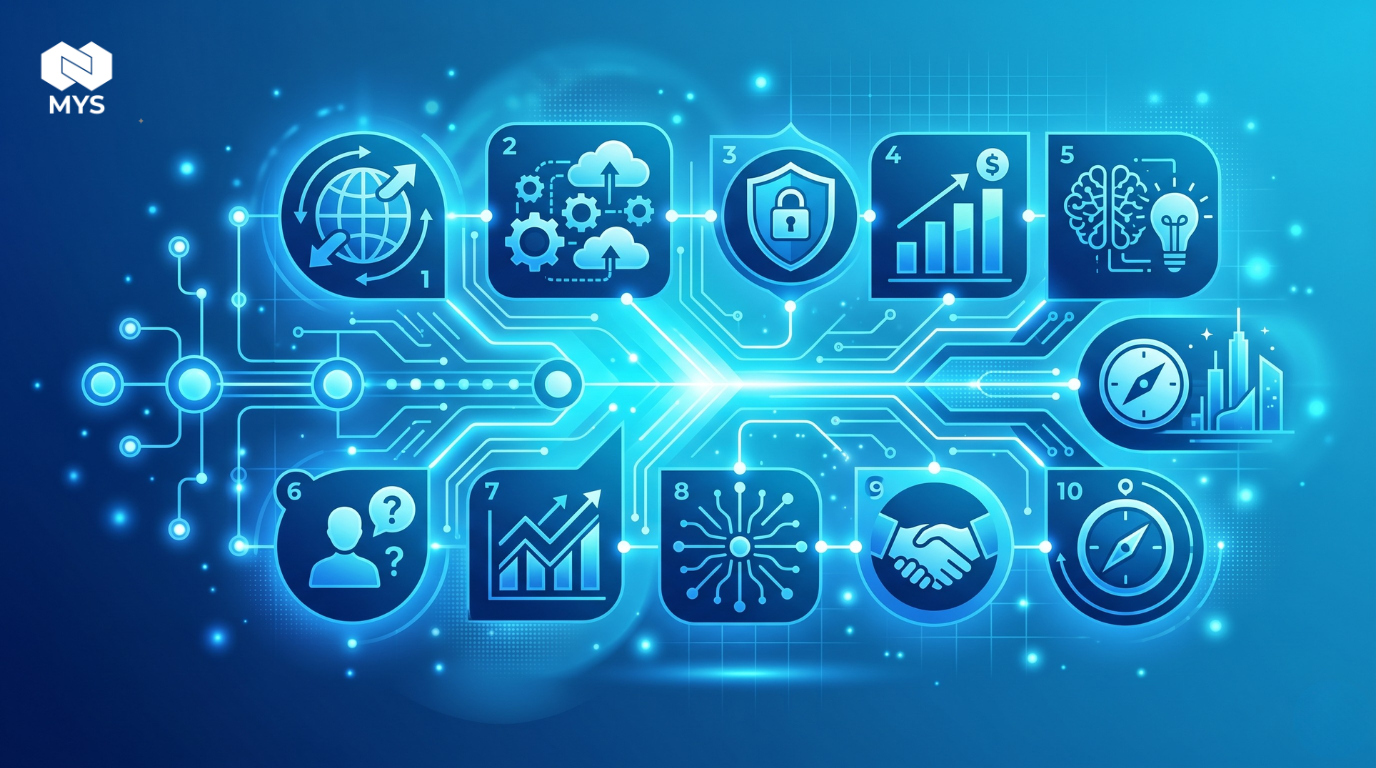
The corporate rationale for technology outsourcing has officially shattered its historical boundaries. In the hypercompetitive corporate landscape of 2026, tech partnerships can no longer be viewed through the narrow, legacy lens of basic cost reduction or routine “keep-the-lights-on” infrastructure management. Today, outsourcing relationships are strategically leveraged to drive core business innovation, extreme operational agility, and deep architectural resilience.
We have entered a major macroeconomic inflection point. The explosive maturation of agentic AI frameworks, a volatile global cyber-threat matrix, and a worsening specialized talent crunch mean that a “business-as-usual” outsourcing playbook is an absolute liability. Tech leaders who fail to aggressively review, re-engage, and renegotiate their third-party service agreements risk falling behind their competitors within months.
To ensure your engineering partnerships deliver compounding business value without introducing catastrophic liabilities, every CIO, CTO, and founder must deliberately answer these 10 foundational outsourcing strategy questions.
1. How Does Our AI Strategy Impact Our Outsourcing Choices?
Modern outsourcing partners are no longer just providing basic remote code execution or cloud hosting; they are actively delivering your data governance and algorithmic compliance frameworks. When evaluating an AI development outsourcing partner, you must verify their ability to manage automated workflows responsibly. Demand absolute clarity on their internal bias detection, model explainability tooling, and strict adherence to emerging global frameworks such as the EU AI Act.
Furthermore, as large language models (LLMs) continue to yield highly volatile outputs depending on their architecture, you cannot treat an external vendor as a black box. Your partner must possess the deep technical expertise and contractual agility needed to pivot between model ecosystems fluidly. They must operate as a collaborative co-creation unit that blends seamlessly into your internal sprint cycles to accelerate experimentation, production deployment, and measurable ROI.
2. Are We Contractually Guarding Our Intellectual Property in the AI Era?
This is one of the most volatile risks facing modern enterprises. Traditional technology service contracts lack the robust guardrails required to protect proprietary codebases and customer records from machine learning exploitation. You must aggressively audit your agreements and ask:
-
Does the vendor retain the right to train their internal, proprietary AI engines or LLM models on your contracted source code, database schemas, or corporate data?
-
How do you mathematically guarantee that strategic insights or custom features developed on your organization’s behalf are not being packaged and sold to your direct industry competitors?
-
What explicit technical controls are written into the contract to prevent code exfiltration, document leaks, or proprietary data scraping into personal or public developer code repositories?
At MYS-VN, our stance on intellectual property is uncompromising. Every single line of code written, every data derivative generated, and every fine-tuned model weight engineered by our dedicated pods remains 100% your exclusive corporate property from Day 1.
3. Are Our Sourcing Decisions Weakening Our Security Posture?
The global cyber attack surface has expanded exponentially, with sophisticated actors deploying automated, AI-driven phishing and ransomware toolchains. There is a surging, documented wave of enterprises being compromised not through their internal systems, but via downstream security vulnerabilities in their third-party providers’ environments.
Security can no longer be a separate process bolted onto a software deployment at the end of a lifecycle. Tech leaders must adopt a strict, security-first outsourcing model. You must independently audit your vendor’s internal cybersecurity posture, access controls, and data protection frameworks on a continuous baseline to safeguard your innovation velocity and retain customer trust.
4. Do We Know Exactly Who Has Access to Our Technical Supply Chain?
As data effortlessly crosses borders through remote execution networks, geopolitical constraints and data residency rules have become central to IT strategy. You must demand absolute visibility into your outsourcing vendor’s technical supply chain and independent contractor lists.
You need transparent answers to highly specific access questions: Who is authorized to read the raw database entries? Who is reviewing the code repositories? Do the downstream engineers possess unrestricted access to customer-specific production environments? Failing to write explicit provisos into your service level agreements (SLAs) regarding human vs. agentic data access introduces severe data compliance risks.
5. Are We Equipping Our Organization to Manage a Multi-Sourced Environment?
To avoid vendor lock-in, modern enterprises are deploying multi-sourced ecosystems, pairing distinct, best-in-class providers for separate functional requirements. However, many tech leaders severely underinvest in the internal talent and governance models required to integrate these distinct forces.
Never fall into the trap of assuming competing providers will naturally collaborate. Left unmanaged, external vendors will naturally optimize for their own contractual scope. To maximize efficiency, you must establish an independent integration office or a unified governance board to manage technical interdependencies and unify cross-functional communication channels.
6. Can Our Outsourcing Engagements Keep Pace with Accelerated Tech Changes?
Static, multi-year outsourcing contracts are built for an era that no longer exists. Locking your organization into a rigid, three-year development cycle leaves you stranded with legacy technology, completely unable to leverage rapid architectural breakthroughs like agentic AI or real-time predictive analytics.
Modern contracts must be treated as living strategies designed for agility and modular flexibility. Tech leaders must shift toward dynamic, outcome-based partnerships. To ensure your partnerships evolve alongside the tech ecosystem, your master services agreements must include mid-contract recalibration tools, such as:
-
Evergreen Clauses: Enabling automated, rolling contract updates.
-
Technology Refresh Cycles: Mandating that the vendor updates your underlying framework versions continuously.
-
Joint Steering Committees: Facilitating monthly strategic pivots based on real-world business performance.
7. How Does Our Core Tech Stack (ERP/CRM) Influence Our Outsourcing Strategy?
Major enterprise software platform providers are aggressively embedding autonomous workflows and agentic AI directly into their core applications. This rapid platform evolution completely alters the sourcing calculus for CIOs.
Before outsourcing a standard operational function, you must continually ask: Can this process be handled natively within the technology ecosystem we already own? If your existing cloud framework can now autonomously generate advanced business intelligence reports, manage automated expense tracking, or orchestrate marketing triggers, the old choice of “hiring internal vs. outsourcing” is dead. The question is now whether you can eliminate the external process altogether through core platform intelligence.
8. Are Our Tech Contracts Optimized to Capture the “AI Productivity Dividend”?
Legacy outsourcing playbooks rely on locked-in, flat-rate productivity metrics that plateau early in the contract cycle. But as AI toolchains radically compress the time required to write software, manage IT help desks, troubleshoot networks, and perform cloud migrations, labor costs are falling drastically.
If your service contracts do not contain dynamic pricing mechanisms, your organization will completely miss out on these cost improvements. Your provider will silently reap the soaring margin benefits of AI automation while billing you legacy human-hour rates. Agreements must contain clawback clauses or automated productivity commitments that pass these structural savings directly back to you, allowing you to reallocate freed-up capital into core market innovation.
9. Are We Directing Enough of Our Outsourcing Spend to Core Innovation?
The vast majority of traditional cloud and software outsourcing contracts are dangerously defensive, over-indexing on basic uptime, standard server patching, and system maintenance. While keeping the lights on is necessary, it does not build a competitive moat.
Your technology partners must actively bring advanced expertise in cloud-native data analytics, custom automation, and AI adoption to the table. The ideal approach is to mandate a formal innovation roadmap directly within your outsourcing agreements. By working with an agile external partner to explore emerging tech, you can accelerate your R&D velocity without overextending your internal engineers or disrupting core day-to-day operations.
10. How Realistic Are Our Underlying Outsourcing Business Cases?
Making a sourcing decision based on flawed, binary assumptions—such as “we don’t need external talent because we will completely automate this department”—creates massive operational vulnerabilities. If your internal automation underperforms, hits a compliance wall, or encounters an unexpected technical hurdle, you will instantly be left with stranded work you did not anticipate.
You must apply a highly rigorous, risk-adjusted lens to every technical business case. Sourcing decisions should prioritize flexibility, giving you the explicit contractual right to flex your engineering team’s size up or down smoothly as your automation maturity dictates.
The MYS-VN Standard: Engineered for the 2026 Sourcing Reality
The traditional, transactional outsourcing framework is dead. Tech leaders can no longer simply “set and forget” their external partnerships. Success requires an engineering extension that matches your data commitments, respects your intellectual property, and passes the financial benefits of modern automation directly to your bottom line.
At MYS-VN, headquartered in Cầu Giấy, Hà Nội, we built our entire business model to answer these 10 core questions perfectly.
Elite Talent match via MYS Academy
We do not operate a generic bench of commoditized coders. Through our elite internal training division, MYS Academy, we meticulously cultivate our engineers to act as high-level developer-managers. They are rigorously trained in advanced MLOps, private data isolation architectures, and rapid deployment toolchains (such as Claude Code). Before they write a single line of code for your project, they are certified in enterprise-grade security and compliance standards.
Infrastructure Hardening and Modern Stacks
We ensure your systems are robust and future-proof. Our dedicated pods excel at building scalable full-stack applications, managing complex databases, and configuring hardened, zero-downtime server architectures (utilizing optimized Nginx load balancing, automated SSL pipelines, and rigid DNS record management). We ensure your data boundaries are ironclad, executing advanced AI integrations that protect your proprietary data from touching public domains.
Is it time to overhaul your legacy sourcing contracts and unlock true development velocity?
Contact the software architects at MYS-VN today to schedule a deep-dive technical consultation. Let us audit your product roadmap, secure your data pipelines, and deploy highly agile, product-linked pods that turn complex technological disruptions into your absolute competitive advantage.